

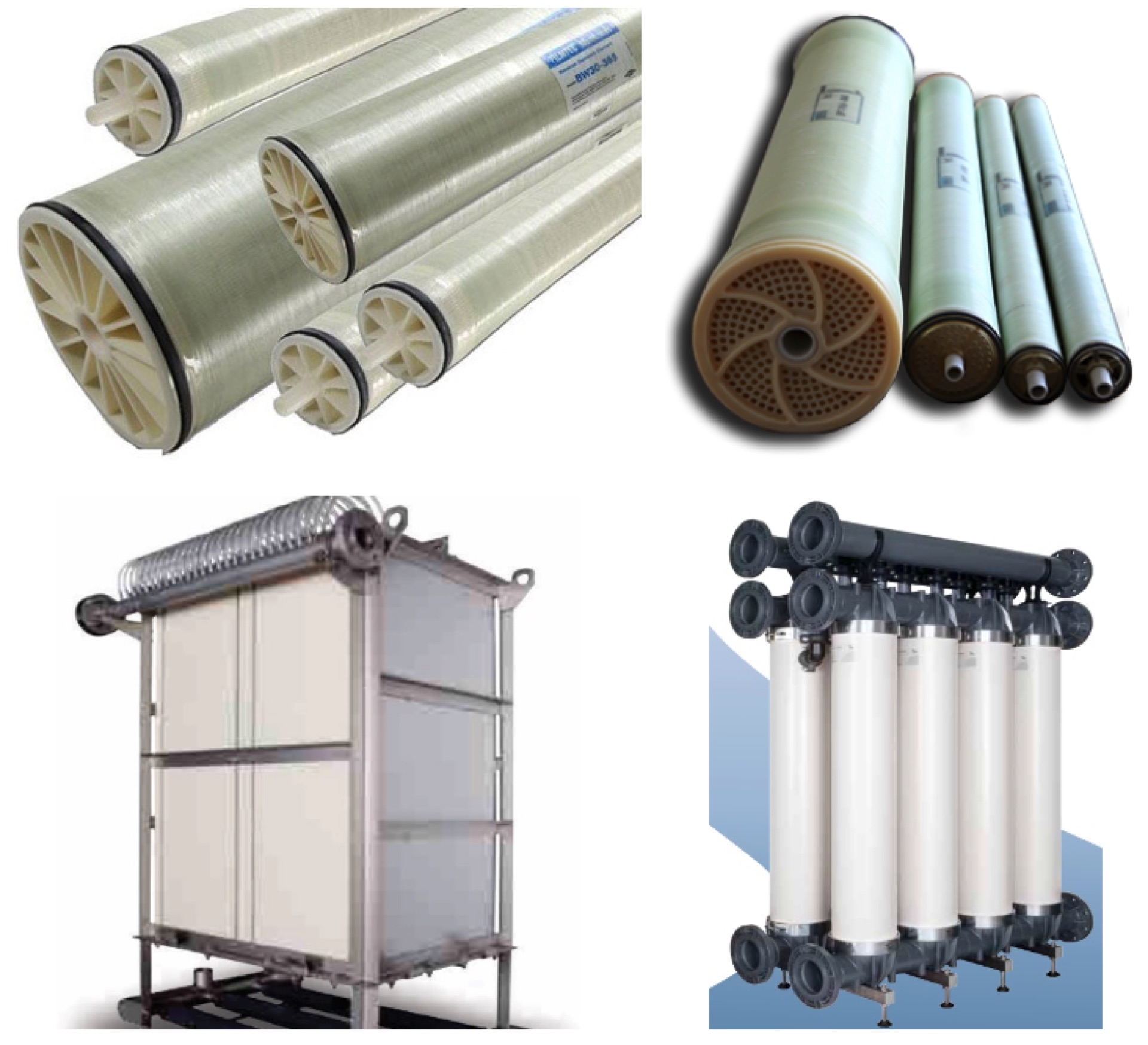
RO vs UF vs NF vs MBR: Choosing the Right Membrane Technology
RO vs UF vs NF vs MBR: Choosing the Right Membrane Technology
Membrane filtration has become a key solution for industries seeking cleaner water, improved efficiency, and sustainable wastewater management. However, with several membrane technologies available, choosing the right one can be confusing.
Here's a quick guide to the four most common membrane technologies.
Ultrafiltration (UF)
UF membranes remove suspended solids, bacteria, viruses, and colloids while retaining beneficial dissolved minerals.
Ideal for:
-
RO pretreatment
-
Municipal water treatment
-
Industrial water reuse
-
Food & beverage processing
Best when: You need reliable filtration and microbial removal without removing dissolved minerals.
Nanofiltration (NF)
NF membranes selectively remove hardness, color, organic matter, and certain dissolved salts.
Ideal for:
-
Water softening
-
Industrial process water
-
Textile and food industries
Best when: You want to reduce hardness and contaminants while maintaining lower operating costs than RO.
Reverse Osmosis (RO)
RO membranes provide the highest level of purification by removing dissolved salts, minerals, bacteria, viruses, and other contaminants.
Ideal for:
-
Drinking water production
-
Desalination
-
Boiler feed water
-
High-purity industrial applications
Best when: Maximum water purity is required.
Membrane Bioreactor (MBR)
MBR combines biological treatment with membrane filtration to produce high-quality treated wastewater suitable for reuse.
Ideal for:
-
Industrial wastewater treatment
-
Municipal wastewater plants
-
Commercial and hospitality facilities
Best when: Water recycling and wastewater reuse are priorities.
Which Membrane is Right for You?
The answer depends on your water quality goals:
-
UF → Remove particles and microorganisms
-
NF → Reduce hardness and organic contaminants
-
RO → Achieve high-purity water
-
MBR → Treat and recycle wastewater
Selecting the right membrane technology can improve efficiency, reduce operating costs, and support sustainability goals. Our team can help you identify the best solution for your specific application.
Need expert advice? Contact us today to discuss your water treatment requirements.